Life is unpredictable—and sometimes, despite your plans and dreams, unplanned events can take you by surprise.
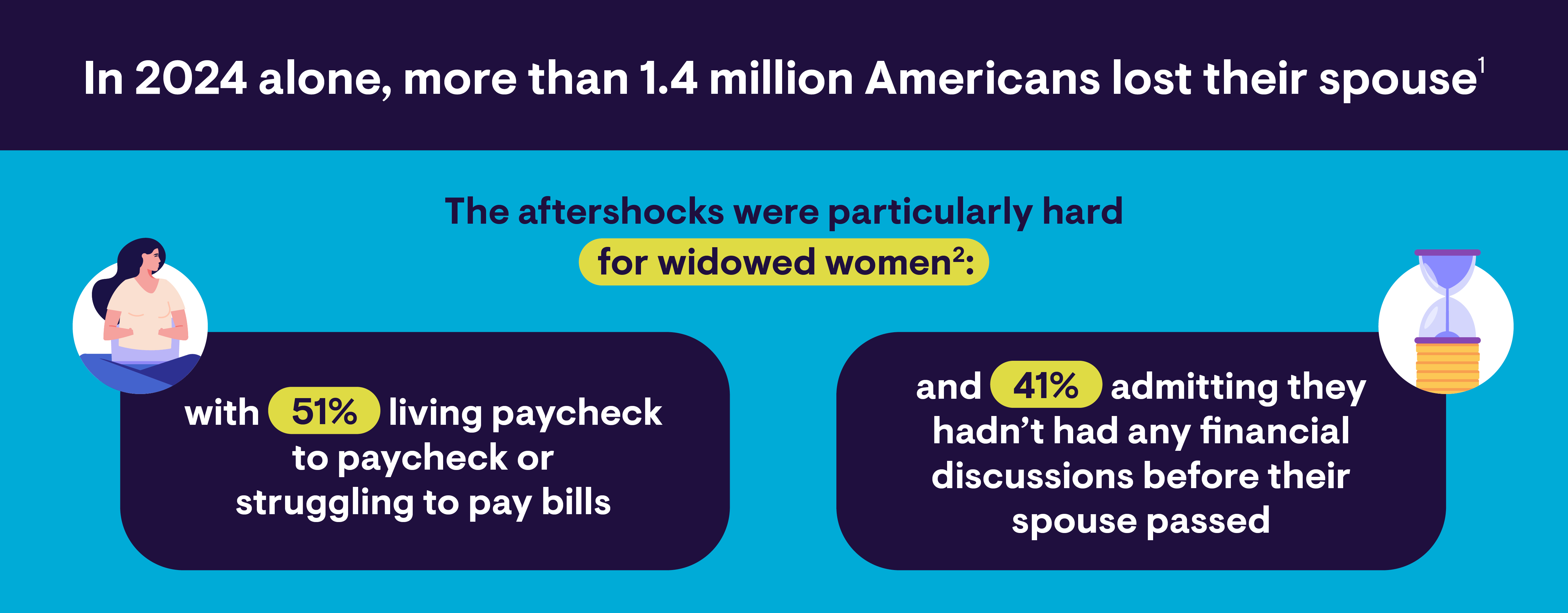
The days—weeks—months—following an unexpected loss are emotional and stressful enough. But having to deal with the financial aftershocks that follow can create both immediate and lasting struggles if you don’t have a safety net in place.
You've likely advised your clients about life insurance—but have you followed your own advice?
Having discussions—and taking action now—could make a world of difference to the surviving spouse if that day comes. But while taking a step back to look at the big picture for your clients is something of an everyday occurrence, doing the same for your own life and financial picture can prove more challenging.
We’re here to help! Use the below guidance to start quantifying your own family’s financial position, explore coverage, and improve your preparedness
1. Quantify your spouse's economic contribution
Whether or not your spouse actively brings in an income, they undoubtedly contribute significant economic value to your family.
From a monetary standpoint, what is their salary or earned annual income? That’s your baseline. As this baseline will reflect current-year value, you can simply multiply this by the number of years to retirement to factor in the long-term implication of that potential loss. You might also want to use historical CPI or a conservative 2 – 3% inflation-adjusted future earnings number to more accurately map out the potential lost income.
Also consider any workplace benefits, like healthcare or dental coverage. Is there a differential involved if you had to switch to your benefits instead? Include that number in your calculation.
Next, consider any work-related future income from assets or accounts like pensions, partner equity distribution, 401(k)s, or bonuses.
Secondary potential costs
Finally, think through secondary, non-monetary contributions that would likely incur a cost to maintain should your spouse pass.
For example, do they clean your home? Drive children to activities? Grocery shop and meal prep? Do laundry? Maintain the yard? Would you need childcare if they were no longer there to care for your children during the days and/or evenings? Each of these is a service that, should your spouse no longer be there to provide, would cost you financially to hire someone else to complete.
Special note for CPA households
As a CPA, your household likely has some added financial factors you should keep in mind when assessing your financial situation. If any of these apply, make sure to consider them in your financial planning picture:
- Bonus structures, partnership distributions, deferred compensation
- Income/cash flow irregularities (busy tax season vs. off-season)
- Practice ownership stakes or partnership buy-in obligations
- Professional liability insurance costs that continue post-death
- Client relationship continuity (especially for sole practitioners)
Estimating the potential lost income is about more than simply figuring out the number that impacts your household today—you should also consider your long-term future.
Many advisors traditionally recommend saving 10 times your annual income for retirement. However, because of the complexities of some CPA income structures, you may find that rule understates your needs, especially if both you and your spouse are high-income earners.
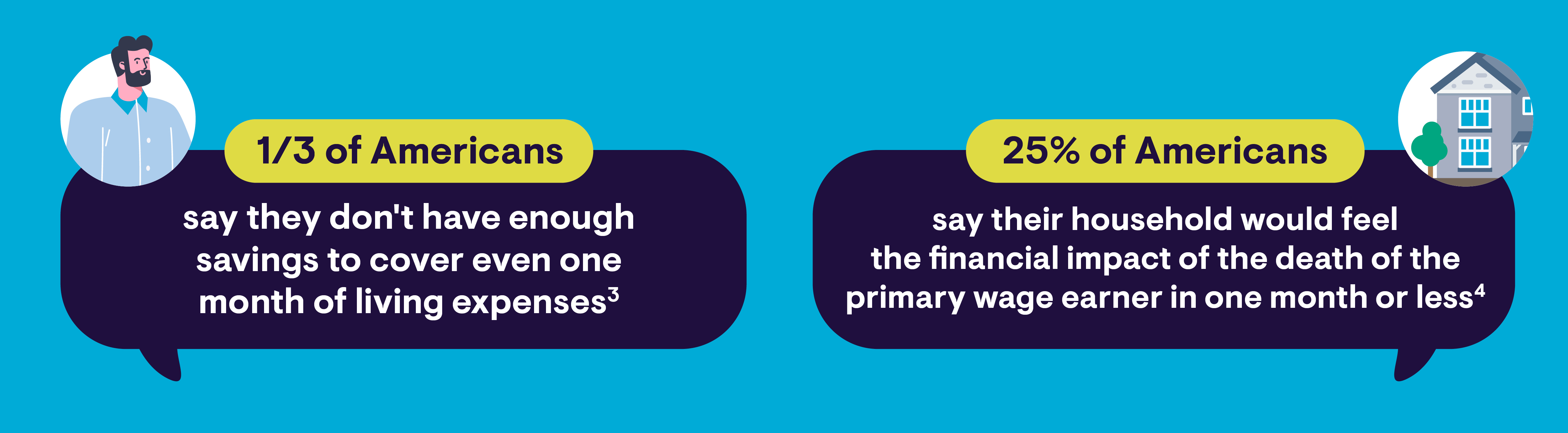
2. Consider living benefits
Many people think of life insurance as something that helps their family after they're gone—which is true—but this is only part of the picture. Modern life insurance policies often include provisions to also provide incidental financial support while you're still living. As you’re evaluating coverage options available to you as an AICPA member, these living benefits deserve as much attention as the death benefit.
Benefits if you become ill
What would happen to your family financially if you or your spouse were diagnosed with a terminal, chronic, or critical illness? These sicknesses often come with their own associated medical costs, not to mention the financial downturn from eventually losing that person’s income. However, many policies include an “accelerated benefit” feature that allows you to access a portion of your death benefit while you’re living under specific conditions. Rather than waiting for the death benefit, you can access the funds to help with things like medical expenses, in-home care, or replacing lost income during treatment.
One of the most important distinctions is that, unlike a policy loan, living benefits typically don't require repayment. Whereas a policy loan—if available—accrues interest and reduces the death benefit your beneficiaries ultimately receive, living benefits generally don’t have a repayment obligation. This is a financially meaningful difference.
These kinds of provisions help minimize the financial impact of an unexpected illness—however, it’s important to note that if you use this option, it is considered an early payout of the policy’s coverage amount; not something that pays in addition to that amount.
Most policies also cap the amount you have access to, generally at somewhere between 50 – 75% of the coverage amount, though this varies by carrier and policy. Accessing this benefit also requires documentation, such as a physician’s certification of your diagnosis.

Other features that help while you're living
Another way to further enhance coverage is to add Accidental Death & Dismemberment (AD&D) coverage. Some plans may include this as a feature, while others offer it as a rider or separate policy. This coverage can pay a benefit on its own or in addition to a death benefit if you experience an accident-related covered loss—such as the loss of a limb or a specific sense.
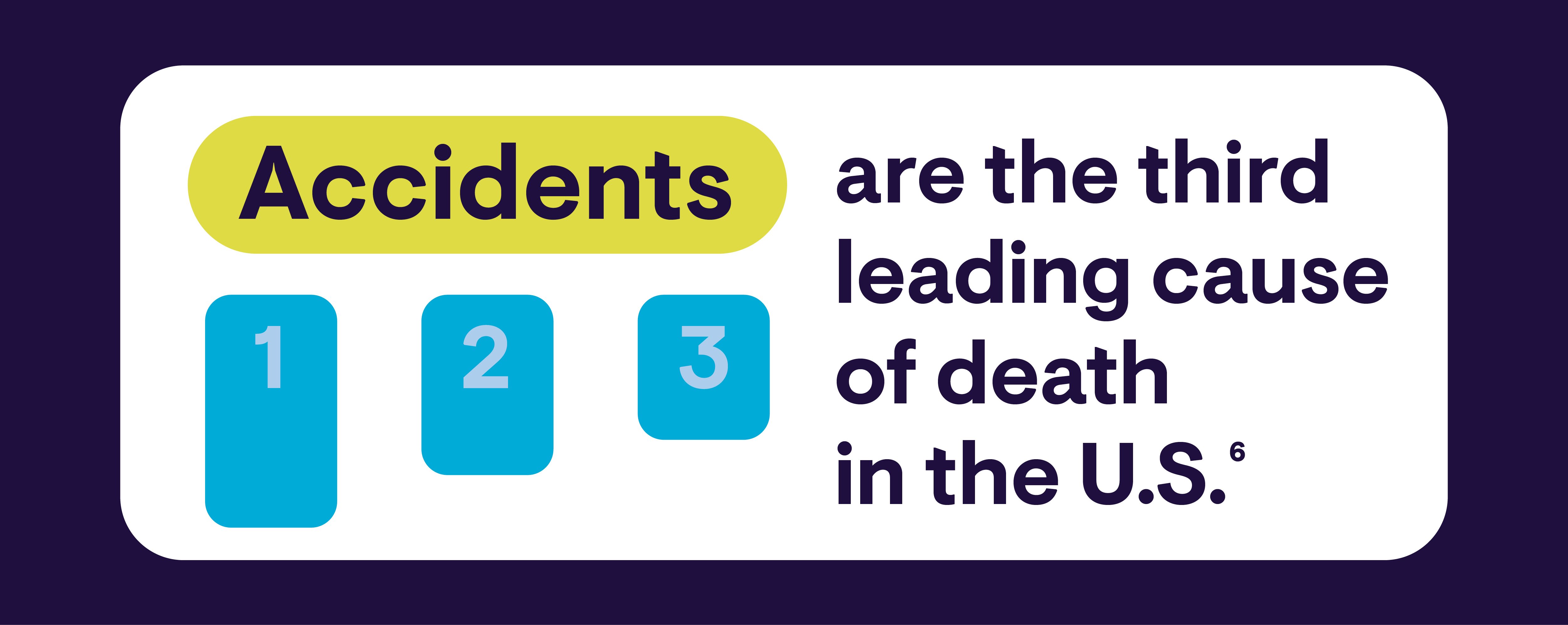
Many policies also offer dependent child riders, which generally offer coverage for children at a relatively minimal additional cost.
These kinds of living benefits are easy to overlook when comparing policies but can add meaningful breadth to your overall coverage. Every policy and provider has its own rules, so carefully read through plan details to understand the nuances, which conditions are covered, when coverage kicks in, and any eligibility rules that may apply.
3. Put plans into action
When you start to think about life insurance for your own life and family, the reality can hit a bit differently. What feels like simple, straightforward guidance given to a client can quickly become overwhelming when you apply it to your own financial situation—even if you're a seasoned expert. But just like you tell your clients, with it doesn’t have to be complex—especially if you give yourself adequate time to plan and prepare.
We’ve broken it down into a three-step action plan to take you from initial consideration through the maintenance phase:
Set a deadline for yourself to inventory which insurance coverage(s) you already have; use that finding to help determine your actual needs.
- List all existing life insurance policies you and your spouse currently have. Note coverage amounts, designated beneficiaries, time remaining on your term (if applicable), and any riders or add-ons.
- Review your employer-provided coverage, determining policy types and amounts, as well as what would carry over were you to change jobs/companies.
- Pull your current will and review beneficiary designations
- Quantify your spouse’s economic value (see above).
- Determine your actual life insurance needs. Our Needs Estimator can help!
Next month: Explore and activate
- Compare the inventory you compiled last month to your Needs Estimator findings to determine whether you have gaps in coverage types or amounts.
- Review your AICPA member benefits—remember, your coverage can follow you throughout your career and into retirement, as long as you remain a member!
- Request quotes on any Plans you’re interested in.
- Activate coverage, pay any premiums, and take a breath!
- Choose a review month—ideally, after busy season—and enter review reminders in your calendar apps.
- During your review month, review all beneficiaries for your will/trust, investment accounts, and insurance policies. It’s a good practice to do this on an ongoing, regular basis as well as any time you have major life changes, such as buying a new home, adding to your family, or changing jobs.
- Schedule an estate planning review if it’s been more than two years since you last updated your documents.
What's Next?
Remember, better financial planning isn't built all at once; it's a practice—one you’ll revisit as your income grows, your family changes, and your career evolves. You already spend your workdays helping clients build financial clarity out of complexity; this is simply doing the same, applying it closer to home.
Through careful analysis, using the tools available to you, and leveraging your AICPA membership benefits, comprehensive planning is at your fingertips.
1 https://data.census.gov/table/ACSDT1Y2014.B12502
2 https://www.prnewswire.com/news-releases/financial-challenges-hit-harder-for-widowed-women-thrivent-survey-finds-302170007.html
3 https://www.usnews.com/banking/articles/2026-financial-wellness-survey
4 https://lifehappens.org/research/they-don’t-understand-life-insurance-and-overestimate-its-cost/
5 https://www.cdc.gov/stroke/data-research/facts-stats/index.html
6 https://blogs.cdc.gov/nchs/2025/09/10/7840/
IMPORTANT NOTICE — Please visit https://www.cpai.com/mib.
Products issued by The Prudential Insurance Company of America may not be available in every state.
This site may contain marketing language, on products issued by The Prudential Insurance Company of America, that has not yet been approved in all states.
Not for use in New Mexico.
Not for residents of New Mexico.
Accelerated Benefit Option is a feature that is made available to Group Life Insurance Participants. It is not a health, nursing home, or long-term care insurance benefit and is not designed to eliminate the need for those types of insurance coverage. The death benefit is reduced by the amount of the accelerated death benefit paid. There is no administrative fee to accelerate benefits. Receipt of accelerated death benefits may affect eligibility for public assistance and may be taxable. The federal income tax treatment of payments made under this rider depends upon whether the insured is the recipient of the benefits and is considered terminally ill. You may wish to seek professional tax advice before exercising this option.
Aon Insurance Services is the brand name for the brokerage and program ad-ministration operations of Affinity Insurance Services, Inc. (TX 13695) (AR 100106022); in CA & MN, AIS Affinity Insurance Agency, Inc. (CA 0795465); in OK, AIS Affinity Insurance Services Inc.; in CA, Aon Affinity Insurance Services, Inc. (CA 0G94493), Aon Direct Insurance Administrators, and Berkely Insurance Agency; and in NY, AIS Affinity Insurance Agency. The Plan Agent of the AICPA Insurance Trust, Aon Insurance Services, is not affiliated with Prudential.
Group Insurance coverages are issued by The Prudential Insurance Company of America, and Group Variable Universal Life insurance is distributed through Prudential Investment Management Services LLC ("PIMS"). Both are Prudential Financial companies, Newark, NJ. Aon Securities LLC and Aon Insurance Services are not affiliated with either Prudential or PIMS.
Group Insurance coverages are issued by the Prudential Insurance Company of America, a Prudential Financial company, Newark, NJ.
1092314-00001-00
Coverage is issued by The Prudential Insurance Company of America.